
IBC Blender
IBC Blender_ A Complete Guide to Blending Solutions
In pharmaceutical and cosmetics industries, IBC blenders play important role in ensuring even mixing which is necessary for product quality. These systems are versatile and can handle different batch sizes and materials. Let’s get into benefits and features of IBC blenders for outstanding blending solutions.
What is an IBC Blender?
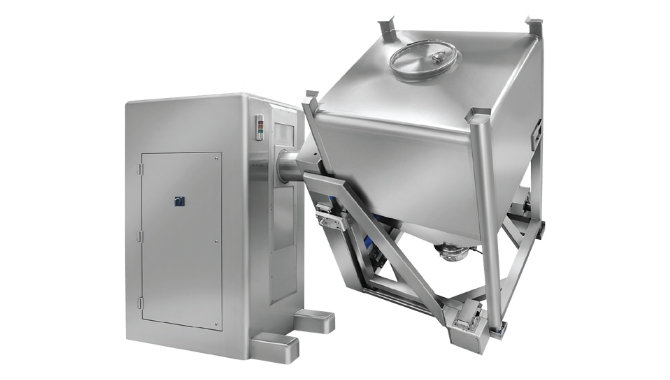
An IBC Blender is short form of Intermediate Bulk Container Blender which is a sophisticated blending system developed for blending granules and powders. It involves tumbling the contents within a sealed container which decreases contamination. You will see these systems are good at decreasing cleaning time and quick batch changes. This improves total productivity.
Key Features of Modern IBC Blenders

Today’s IBC blenders have latest technology to boost blending efficiency and guarantee product integrity. These characteristics greatly enhance operational performance across many fields.
Advanced Control Systems: Modern IBC blenders have easy to operate touchscreens to program blending parameters like time and speed. With advanced automation, these systems have accurate control over blending procedures. This improves uniformity in product quality and decreases human mistakes.
Multi-axis Blending: Multi-axis blending in IBC blenders allows containers to revolve along multiple axes for complete mixing. This procedure blends products thoroughly and decreases shear forces, so integrity of sensitive materials is preserved during blending.
Blending enhancements: They also have features like liquid addition systems and high shear mixing. These modern settings are great for blending cohesive powders and precise liquid addition into the mix.
IBC Blender Benefits

Time and Resource Savings: By blending directly in containers, IBC blenders can save time and resources. You will observe less cleaning time, transfer steps and downtime which increases productivity across your operation.
Production Flexibility: IBC Blenders provide production flexibility as they facilitate fast recipe transformations without thorough cleaning. This allows you to switch between products quickly for different formulations and batch sizes while decreasing downtime.
Cross contamination prevention: The sealed container design of IBC blenders is important to avoid contamination. Materials are blended in a contained environment, away from external contaminants. This guarantees product integrity and safety and less cleaning between batches.
Applications in Main Industries

Pharmaceutical: IBC Blenders are used to mix active ingredients with excipients like lactose and starch. The design preserves batch integrity and reduces cross contamination which is critical in industry.
Food and Beverage: Food and beverage industry uses IBC blenders to mix flavorings and spices. These machines are made for hygienic processing to boost product quality and safety.
Chemical and Cosmetic: They are also preferred for mixing emulsions, suspensions and powders with precision. This is critical for producing specialty chemicals and top quality creams that need uniformity and good mixing.
How to Choose the Right IBC Blender

Picking the right IBC blender requires considering multiple factors to get best mixing and product quality.
Material characteristics: The properties of your material have a very critical part in determining the blending action. Highly viscous materials require more powerful blending mechanisms, like high shear mixtures. Whereas low viscosity liquids can be blended with simpler systems. But materials with high humidity can cake or clump which can impact blending process.
Batch Size and Flexibility: The volume of material to be processed in single run is known as batch size. Large scale operations can use IBC blenders with capacities of 275-330 gallons as they can streamline production and decrease procedure cost and time. For custom orders or smaller batches, you may find portable solutions or flexible IBC more appropriate due to fast changes.
Additional Features: While choosing IBC Blender, you should also be mindful of additional features which can improve its functional capability. Look for variable speed controls for recipe customization, high shear attachments for more intense mixing, and integrated safety features to protect operators during blending.
Enhancing Blending Efficiency with Add-On Technologies

IBC blenders can be further improved with additional advancements. These enhancements not only improve mixing precision but also increase capability of your equipment to produce products with better quality.
Process Analytical Technology (PAT)
PAT increases blending proficiency by real time monitoring of critical process settings. By allowing adjustments during blending, this technology guarantees continuous product quality and decreases variability. Tools like NIR spectroscopy can also enhance process understanding, maintain compliance with industry standards and lower waste.
Intensifiers and High-Shear Attachments
IBC Blenders blending capabilities are largely boosted by high-shear attachments and intensifiers. These appliances generate high shear forces which break down agglomerates and disperse liquids and powders uniformly. You will find them useful when processing sticky materials as it improves blend homogeneity and decreases mixing time.
Liquid Injection Systems
Adding liquid injection systems to your IBC blending process allows you to add liquids directly into powder mixes. This approach makes sure of even dispersion, less clumping and no need for separate mixing stages. It will improve product quality and overall efficiency.
Common IBC Blending Challenges

Cohesive Powders: IBC blending faces great difficulty with cohesive powders due to their ability to clump. Manufacturers normally use intensifiers or high shear attachments to address this problem. These advancements can break down the clumps which provides even mixing and also prevents material segregation.
Segregation During Discharge: Uneven discharge of materials with different particle sizes can cause segregation in IBC blenders. The solution to this is cone valve technology. This technology encourages mass flow and gives uniform discharge by preserving blend integrity and preventing component separation.
Maintenance and Cleaning: IBC Blenders perform best when cleaned and maintained properly. Regular inspections are important to avoid contamination and material build up. By having inclusive cleaning protocols with CIP systems, you can meet hygiene standards and minimize downtime. This way you can operate better across different production cycles.
Conclusion

For different industries, IBC blenders give adaptable, hygienic and proficient mixing solutions. Their features contribute to increased productivity, quality and deceased downtime.
For IBC blending systems according to your needs, consider SaintyCo. Contact us today for expert advice and quote!
FAQ’s
How does IBC blending reduce cross contamination and improve production flexibility?
By containing all the ingredients within the IBC, it reduces cross contamination risk. The design permits for rapid recipe transformations without need for complete cleaning. So this improves overall production flexibility.
How do intensifiers and blending prisms enhance the efficiency of IBC blenders for challenging materials?
These components provide high shear mixing abilities which give better dispersion of cohesive powders and good liquid incorporation. This results in better blend quality.
What safety features are built into IBC blenders to prevent operational hazards during mixing?
These machines have many safety features including positive IBC detection systems, air driven screw jacks and emergency stop buttons. These work together to secure clamping during operation and avoid accidents.
How do IBC blenders ensure consistent product quality in industries with strict hygiene standards?
IBC blenders keep product quality well in high hygiene industries due to their closed system design which reduces contamination risk. It can be cleaned thoroughly between batches to meet strict hygiene standards.


